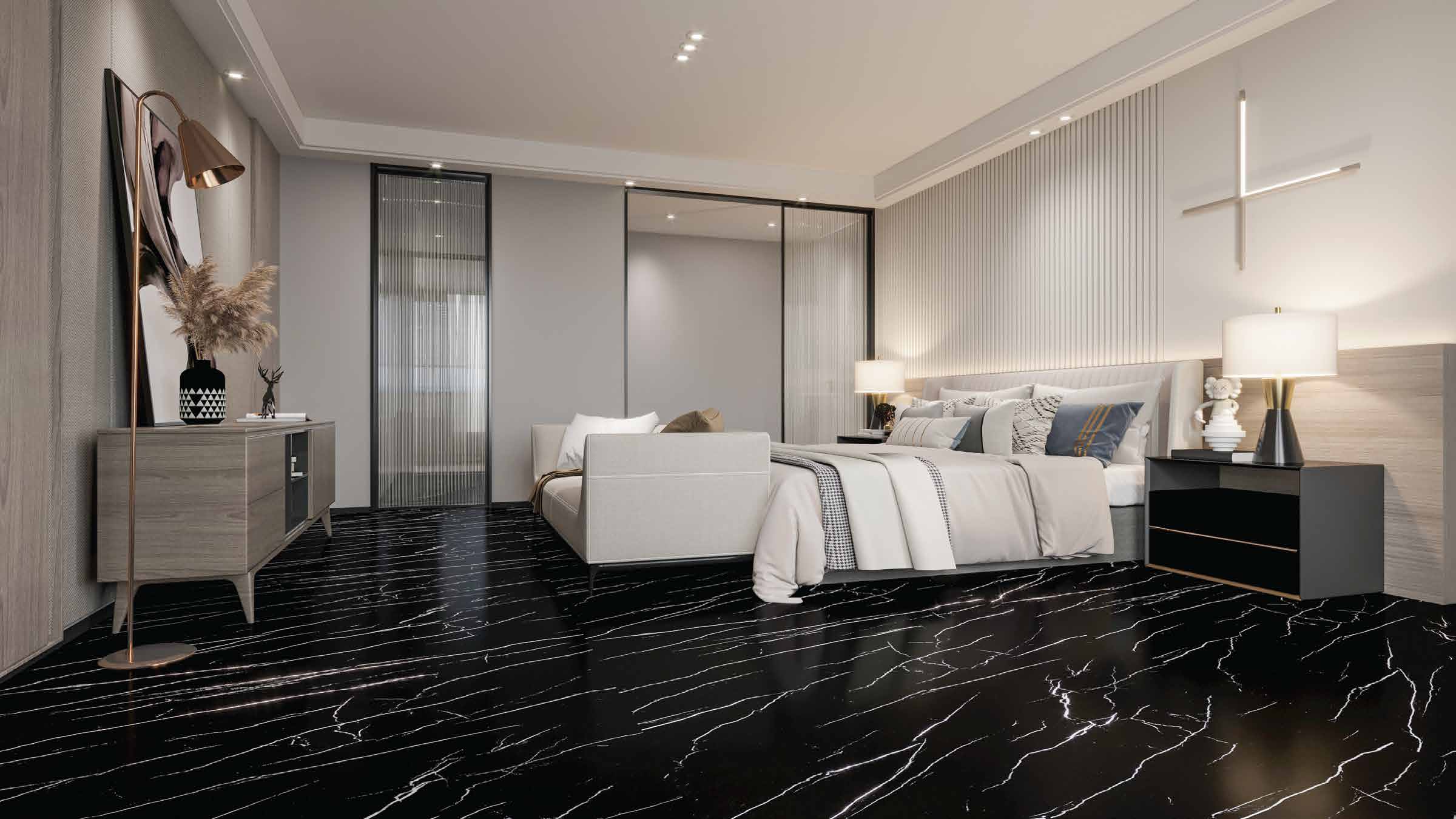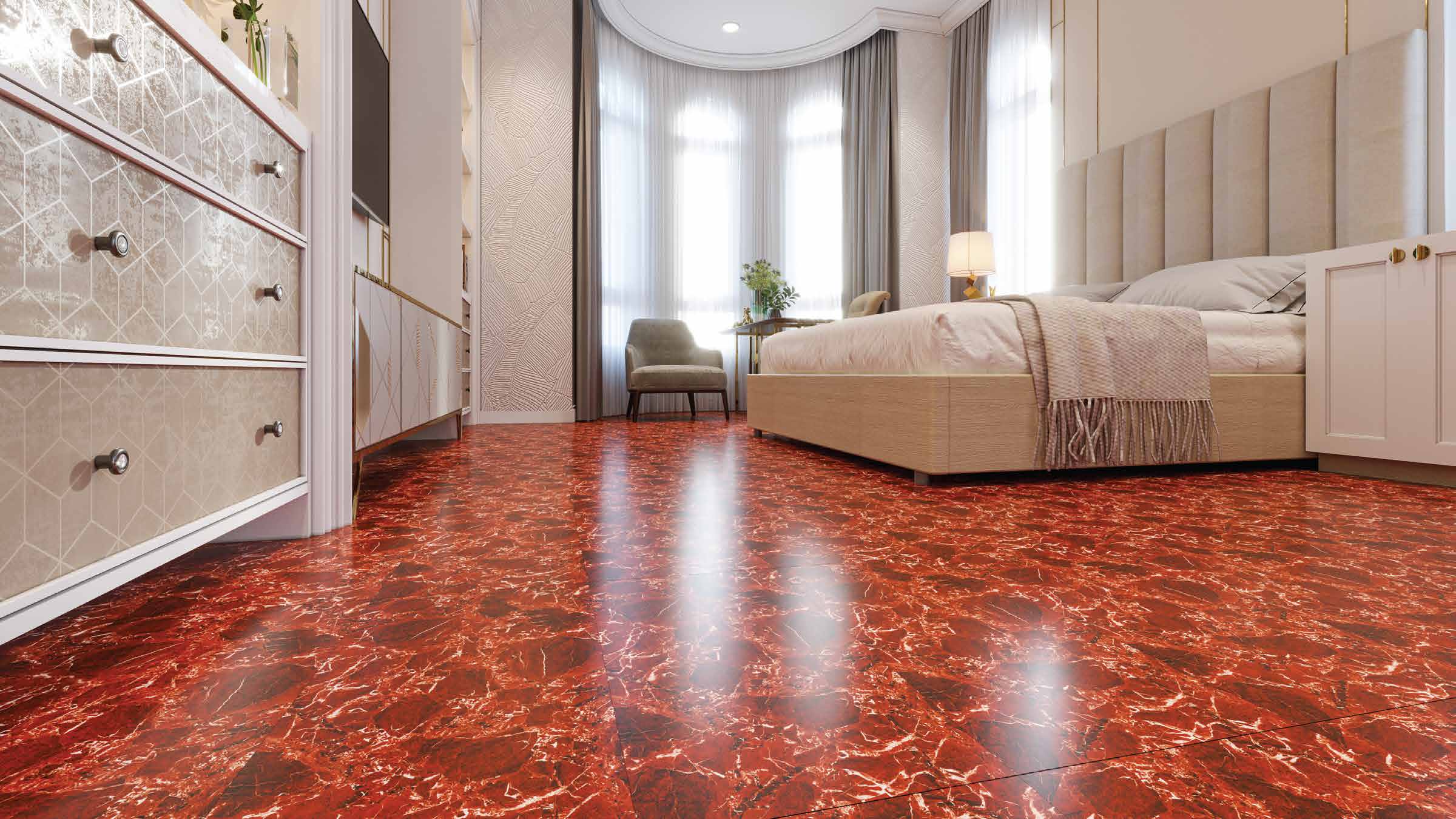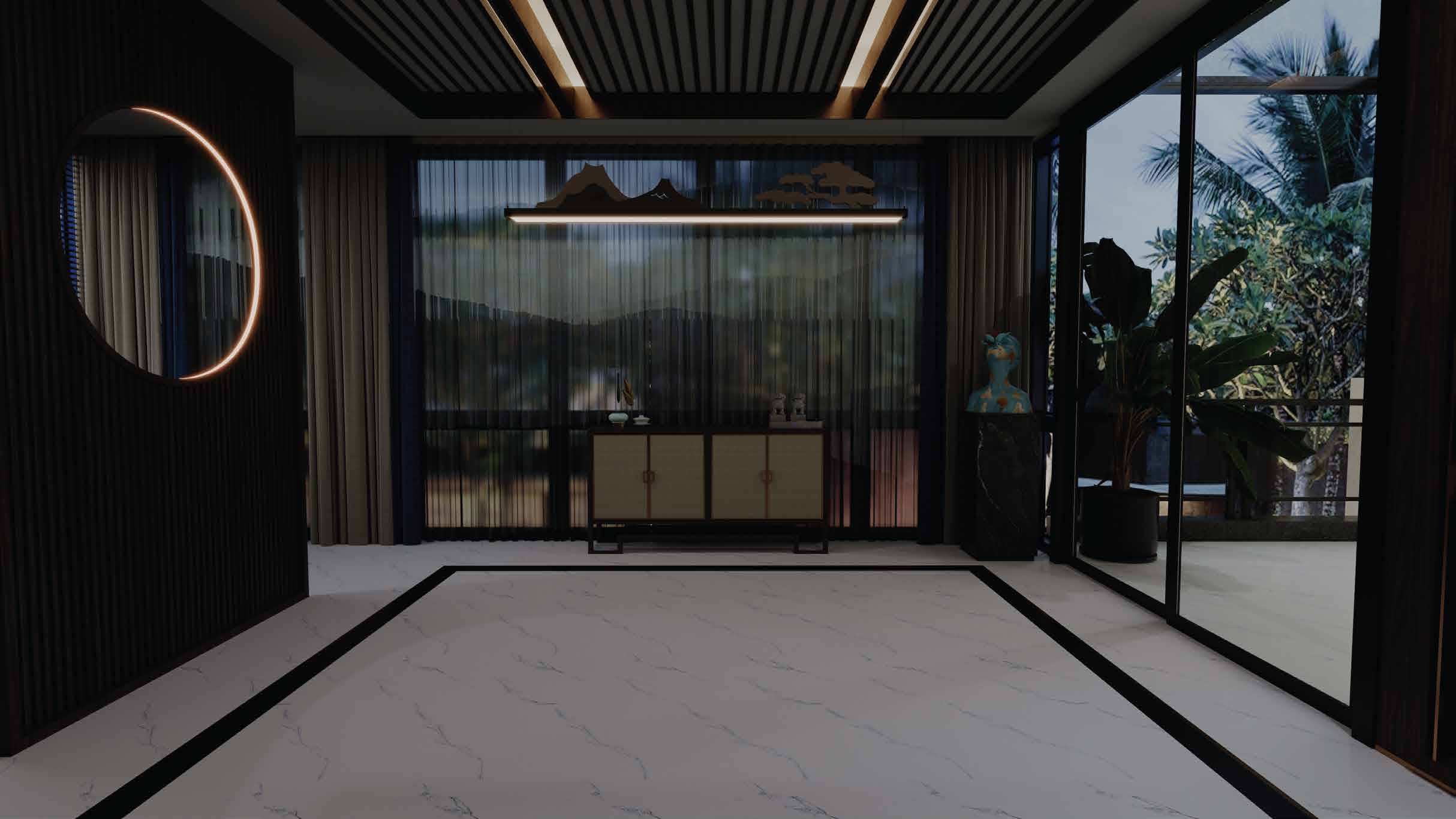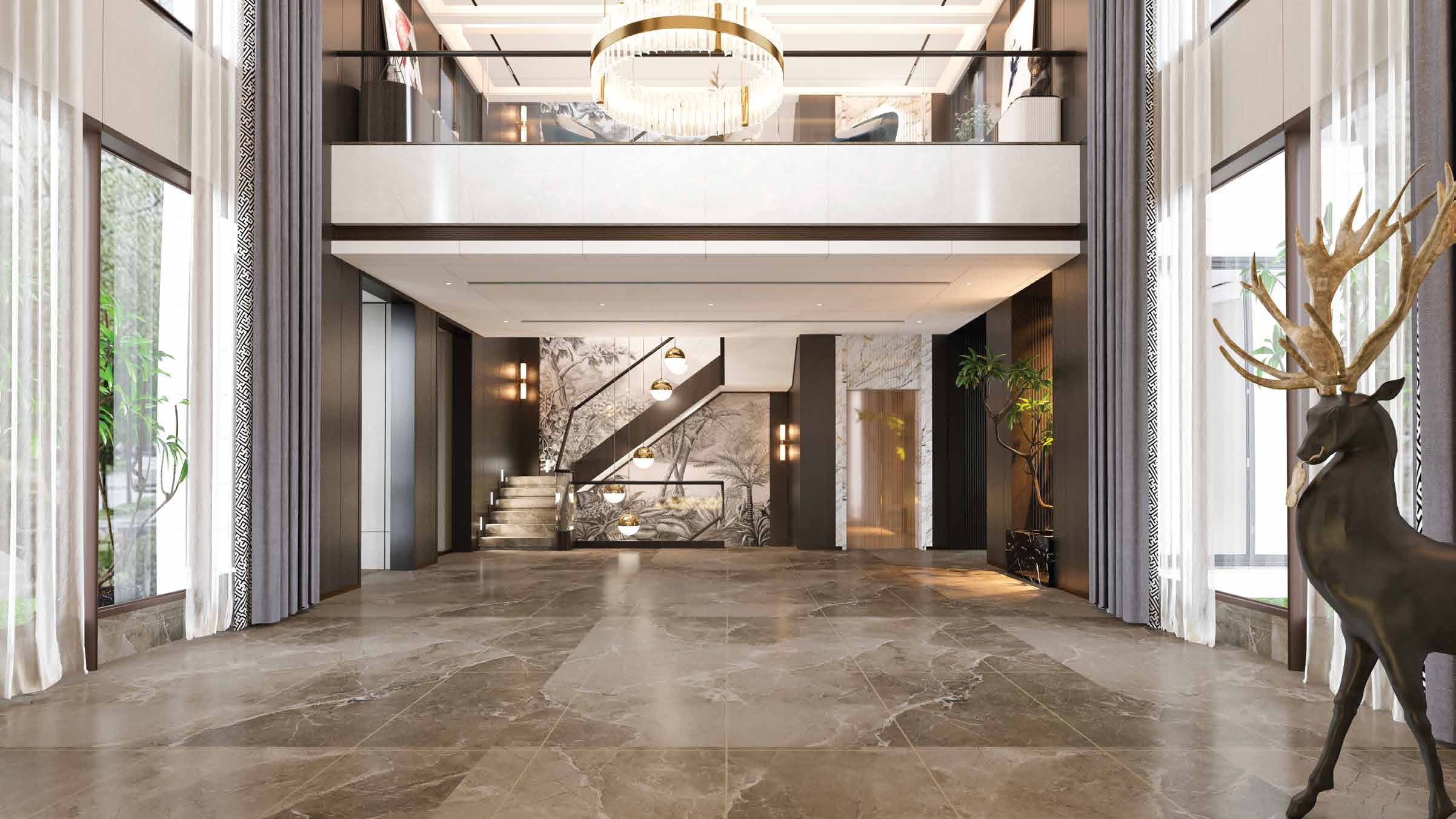
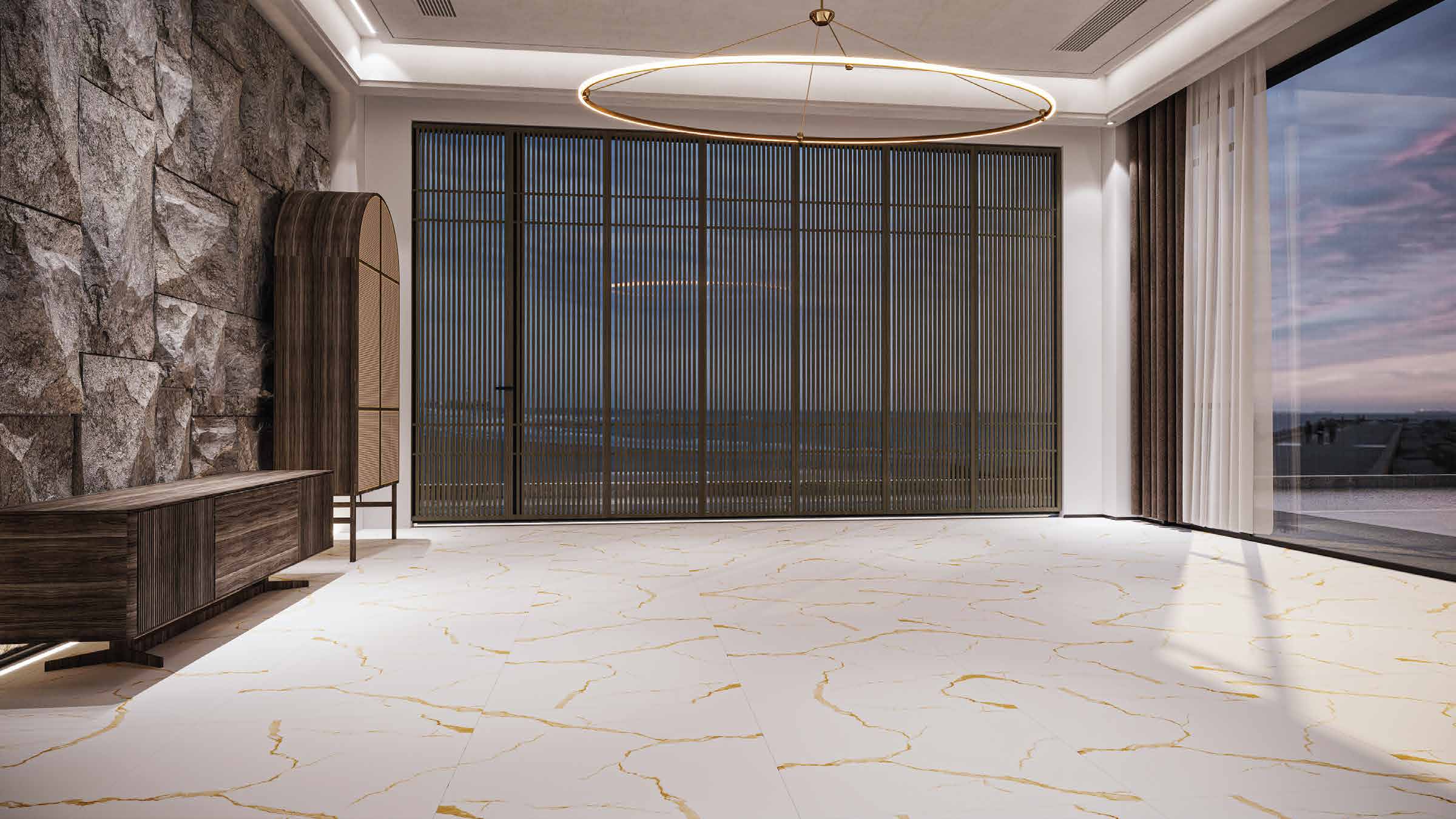
Grand lobby floored in large-format porcelain tile
Ghani Ceramics · 2.0 × 4.0 ft Series

Tiles that outlive trends.

Large-format porcelain engineered with Spanish Torrecid glaze — colour depth, superior texture and surface protection that withstands the test of time. Each design is produced in three face variations.
02
The Material Library

Surfaces up close

Documented from the current catalogue — dimensions, finishes and codes exactly as manufactured. Visit the showroom to hold the real thing.

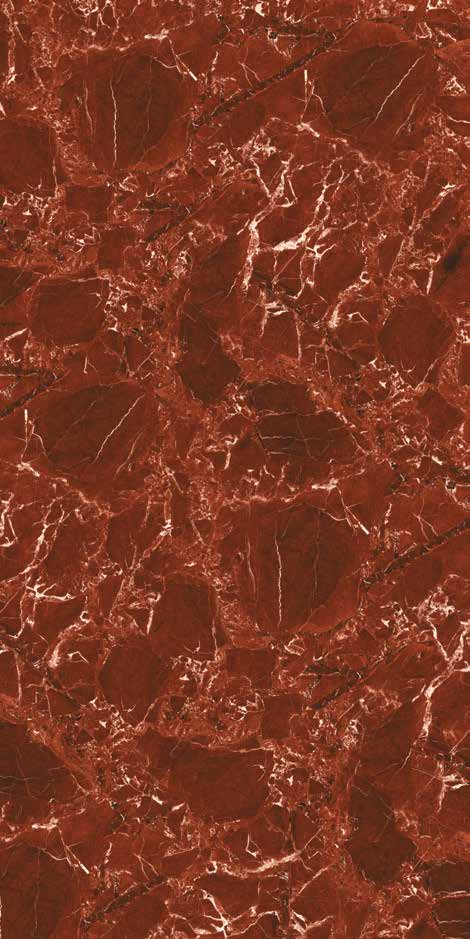
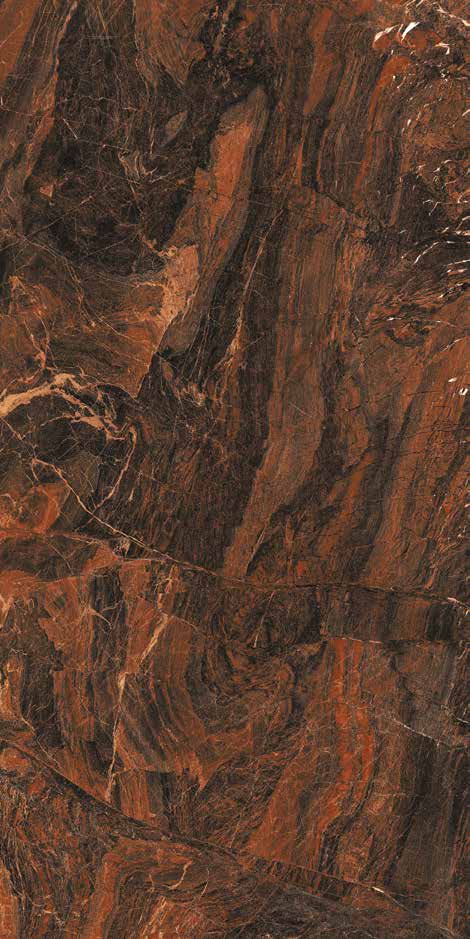
Mahogany Crest tile face — rust and umber strata
Ghani CeramicsTile

Mahogany Crest

Code
PG-12025
Size
600 × 1200 mm
Surface
Polished Glaze
Material
Porcelain-bodied tile
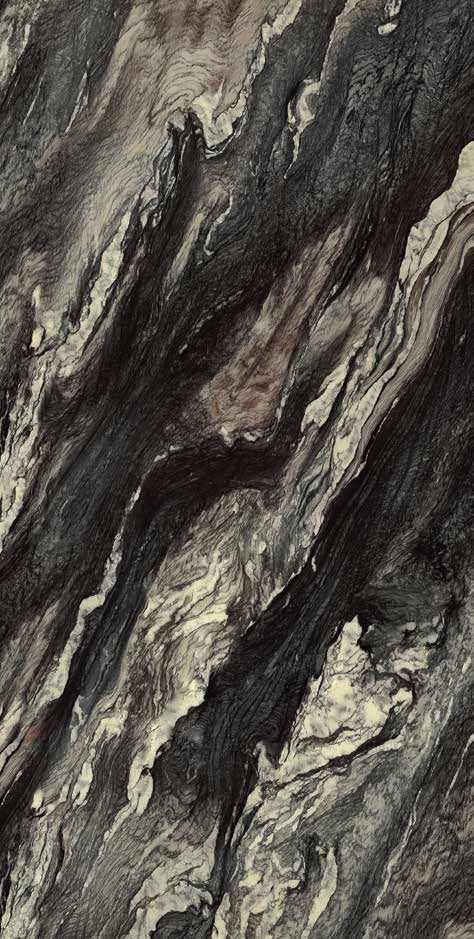
Obsidian Flow tile face — dark flowing quartzite
Ghani CeramicsTile

Obsidian Flow

Code
PG-12045
Size
600 × 1200 mm
Surface
Polished Glaze
Material
Porcelain-bodied tile
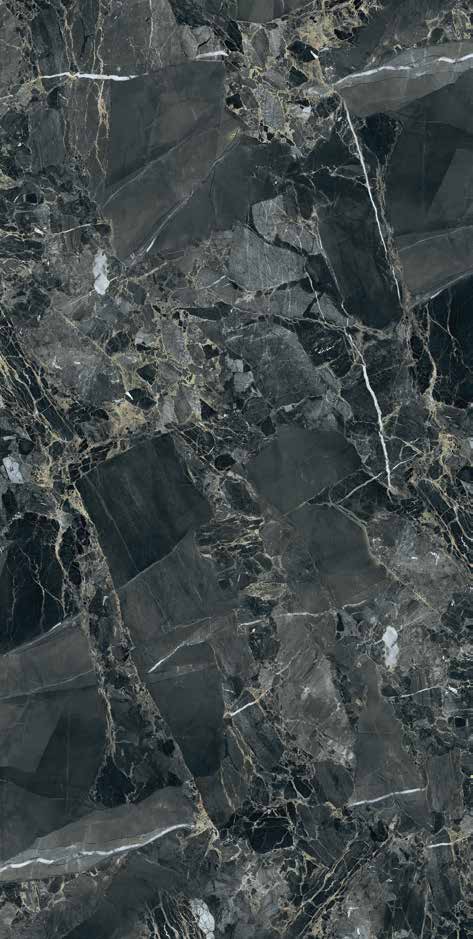
Storm Verge tile face — charcoal breccia with gold veining
Ghani CeramicsTile

Storm Verge

Code
PG-12082
Size
600 × 1200 mm
Surface
Polished Glaze
Material
Porcelain-bodied tile
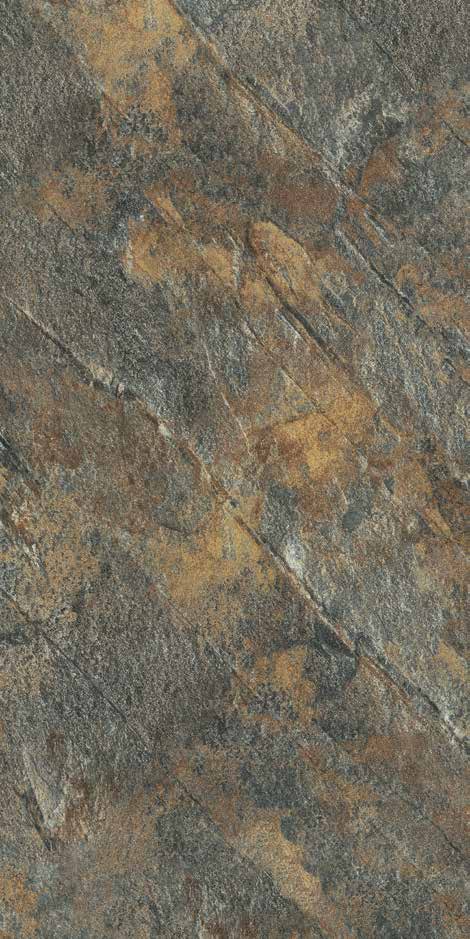
Copper Ridge tile face — rust-toned matt stone
Ghani CeramicsTile

Copper Ridge

Code
MT-12313
Size
600 × 1200 mm
Surface
Matt
Material
Porcelain-bodied tile
Chillrock tile face — cool grey stone grain
Ghani CeramicsTile

Chillrock

Code
MT-12304
Size
600 × 1200 mm
Surface
Matt
Material
Porcelain-bodied tile
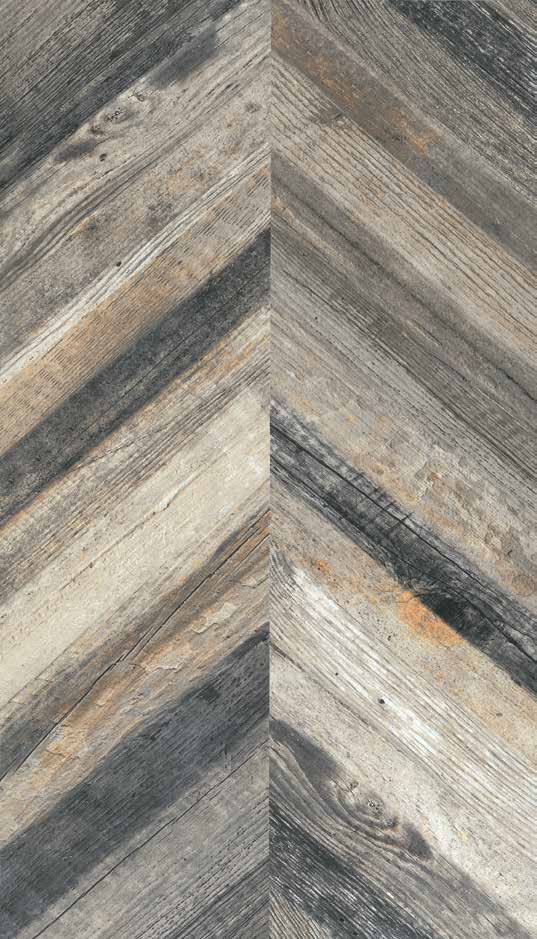
Wood-look chevron tile surface from the Matt range
Ghani CeramicsTile

Wood-Look · Matt Range

Range
Matt Series
Size
600 × 1200 mm
Material
Porcelain-bodied tile
03
Behind the Surface

How a tile is made

Every surface in our showroom begins as raw earth and ends as a fired, glazed sheet of porcelain. Between the two lies a precise, heat-driven craft — here is the journey a Ghani tile takes from mineral to masterpiece.

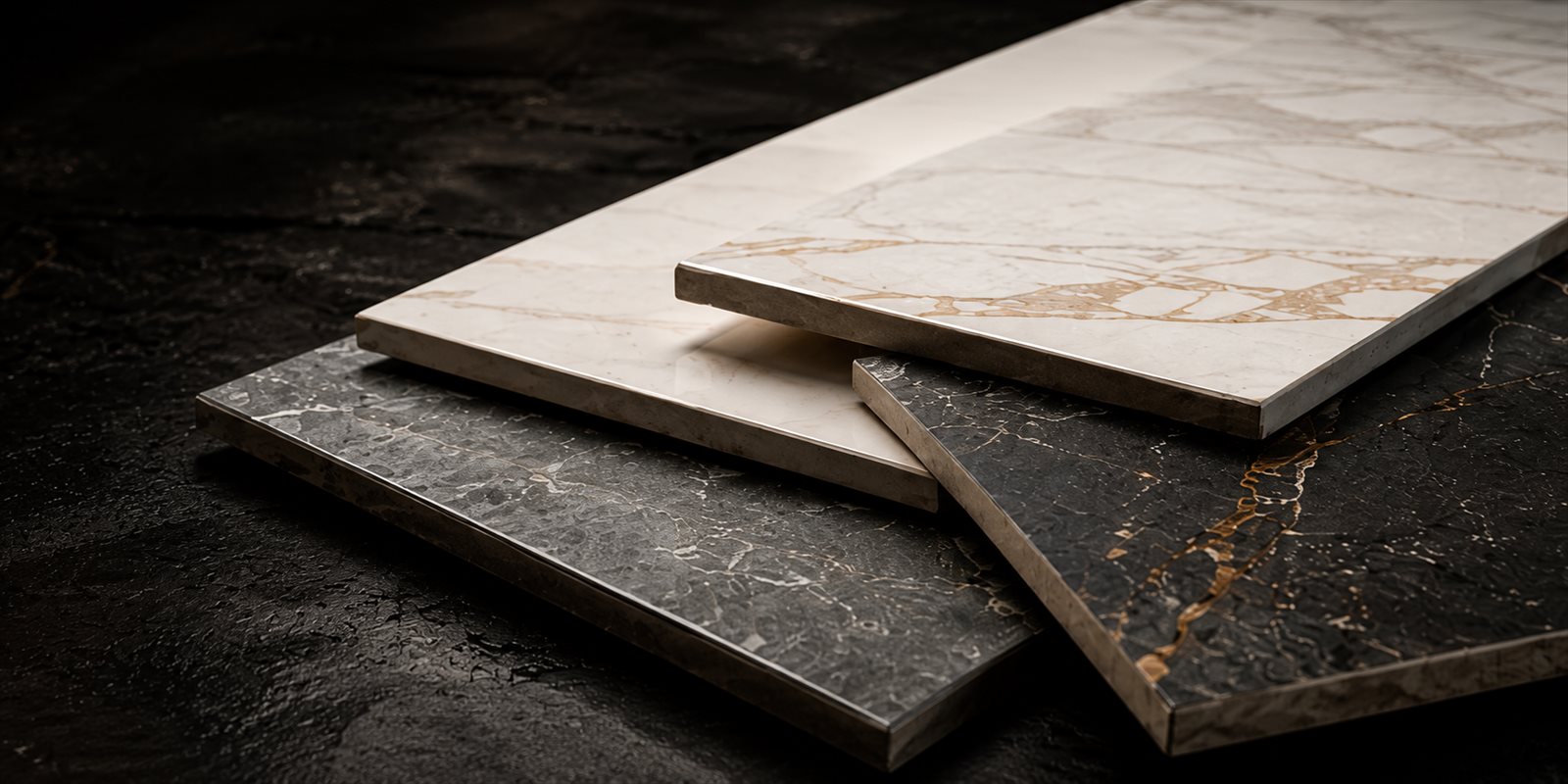
Large-format porcelain slabs stacked on a dark surface
01

Raw Materials

The body of every tile is a measured blend of natural minerals — milled, weighed and recombined to an exact recipe long before the first press.

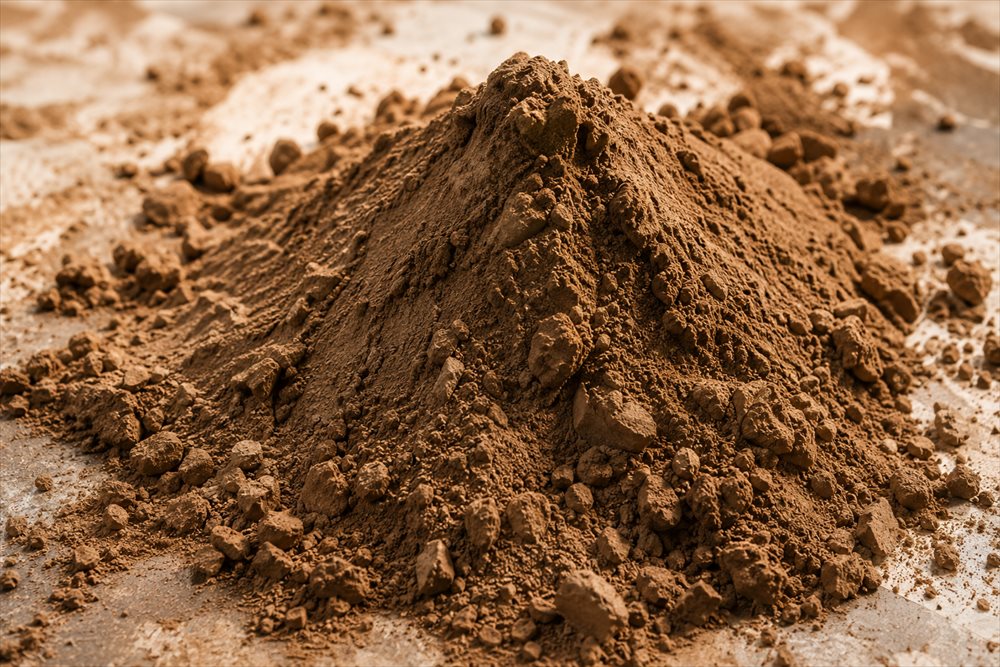
Mound of raw clay powder
ClayThe plastic base that gives the body form and workability before firing.
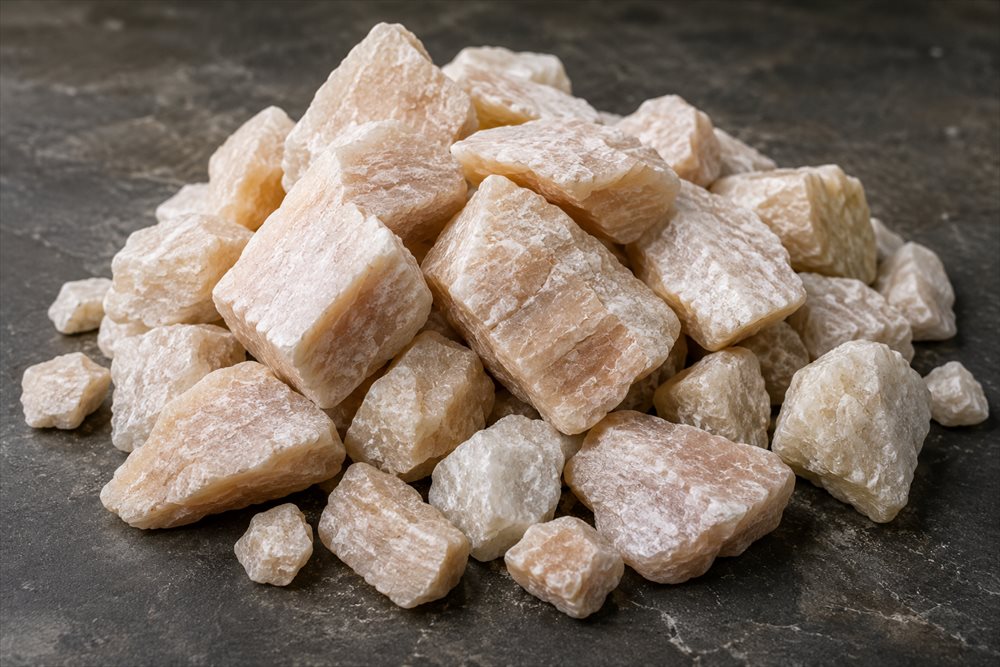
Raw feldspar mineral
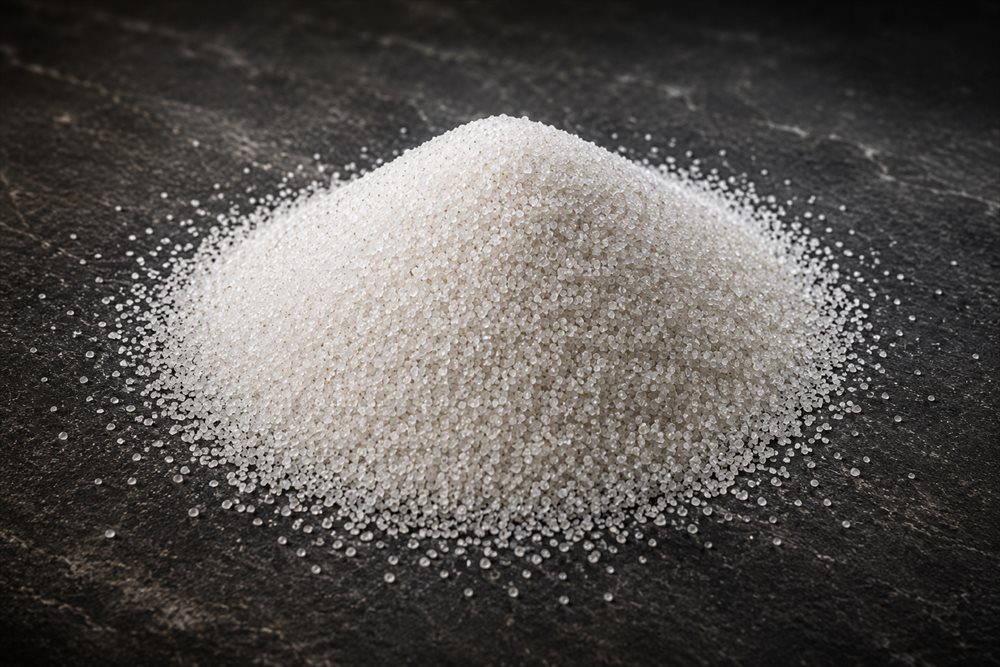
FeldsparThe flux — it melts during firing to fuse the body into dense porcelain.
Silica quartz sand
SilicaQuartz sand that lends the tile its structural strength and hardness.
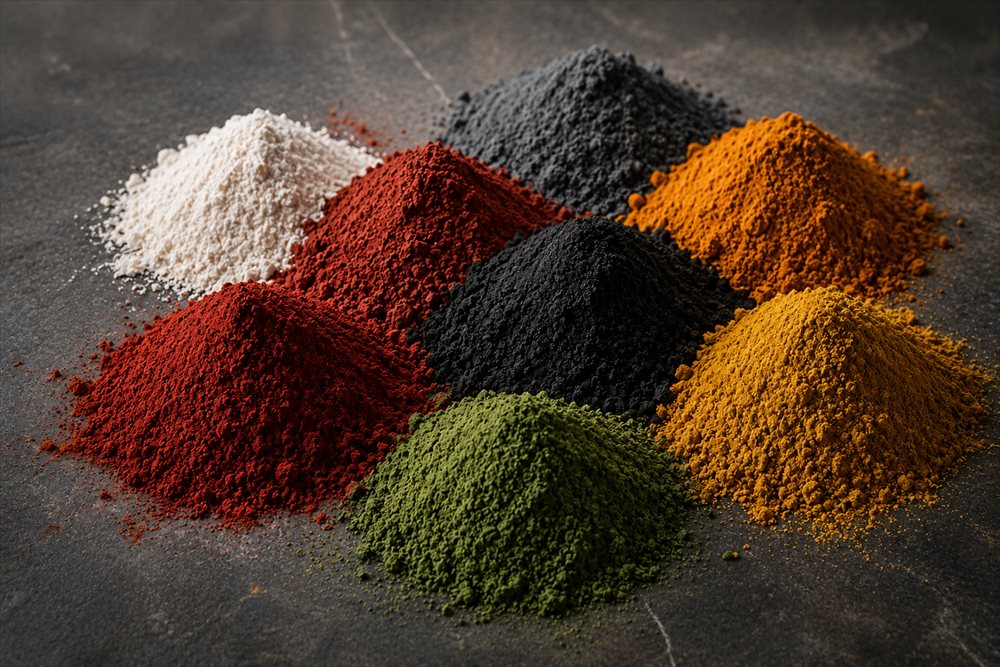
Ceramic pigments
PigmentsCeramic stains and Spanish Torrecid glazes that carry the final colour.
02

The Process

Nine controlled stages turn that mineral blend into a finished surface — each one monitored so every batch matches the last.

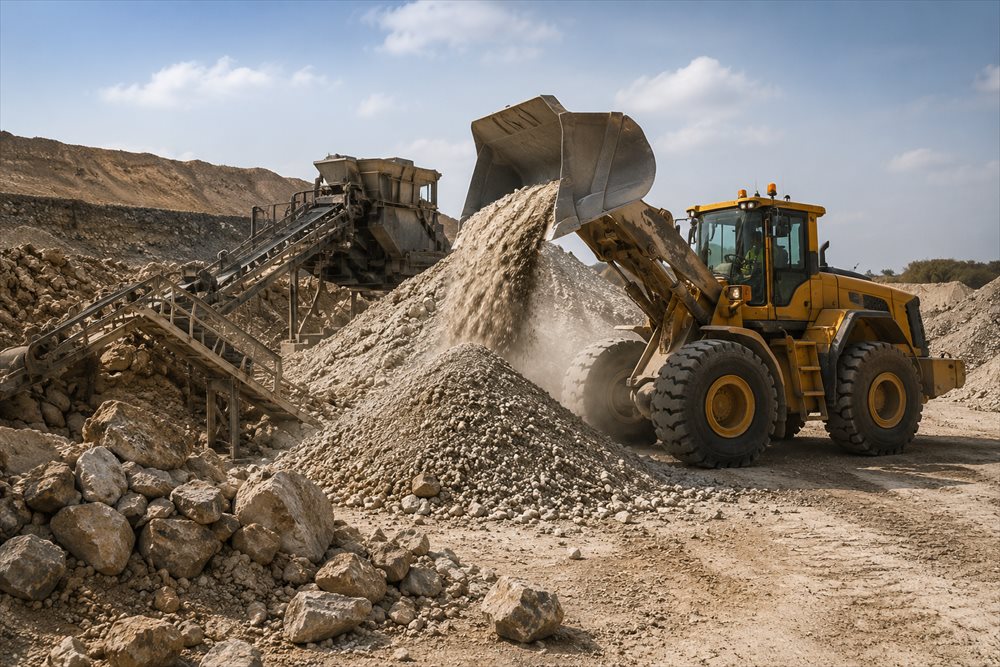
  1. Selecting and testing raw minerals01
    Selection

    Raw minerals are inspected, tested and approved against the body recipe.

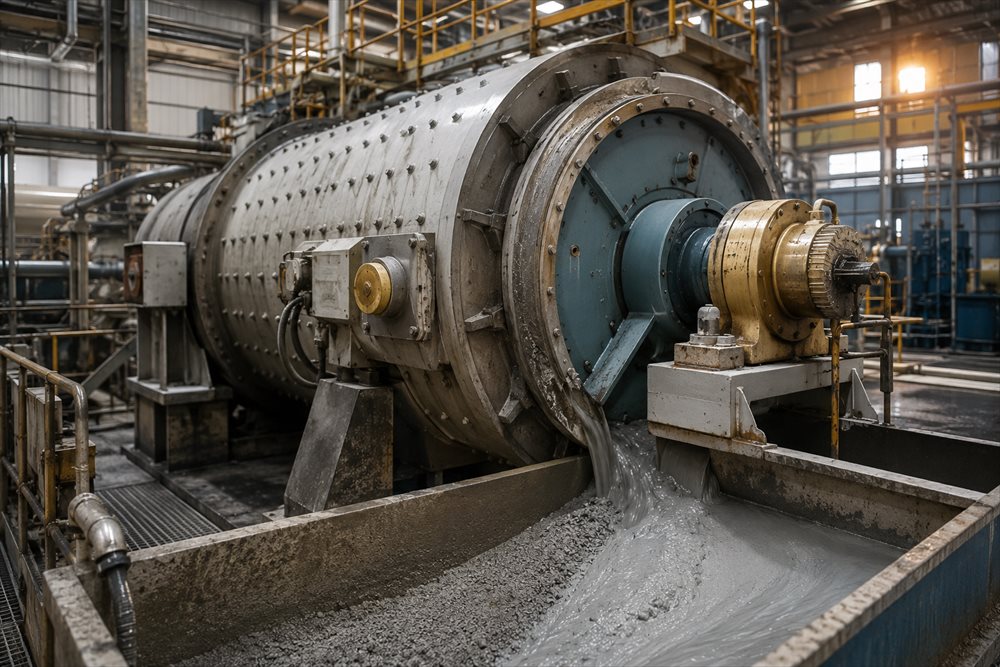
  2. Ball mills grinding materials02
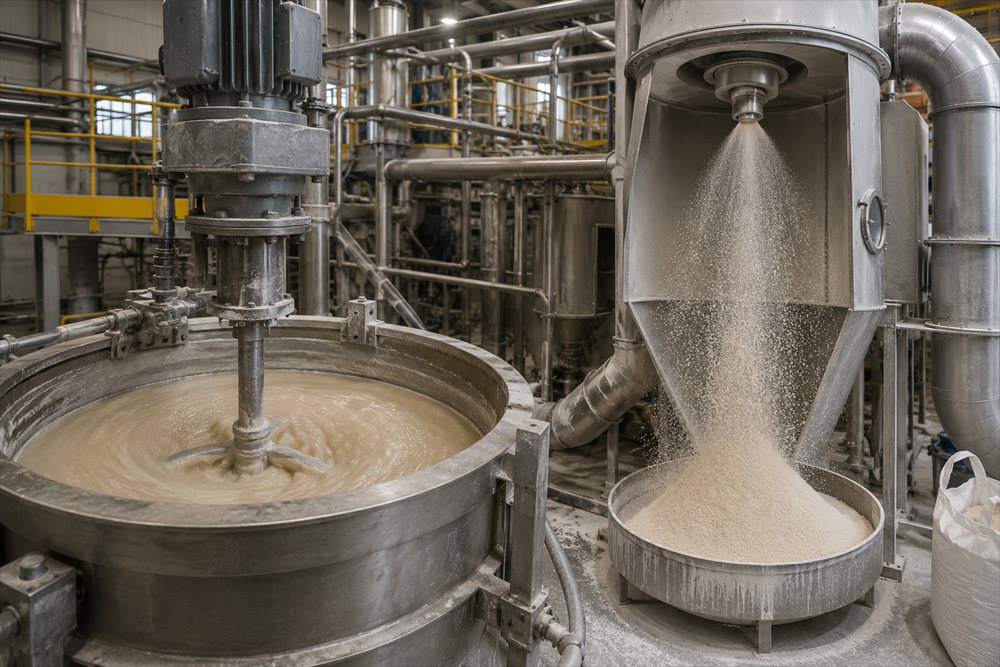
    Grinding

    Materials are wet-milled in ball mills into a fine, uniform slurry.

  3. Mixing and spray-drying03
    Mixing & Spray-Dry

    The slurry is blended and spray-dried into free-flowing powder.

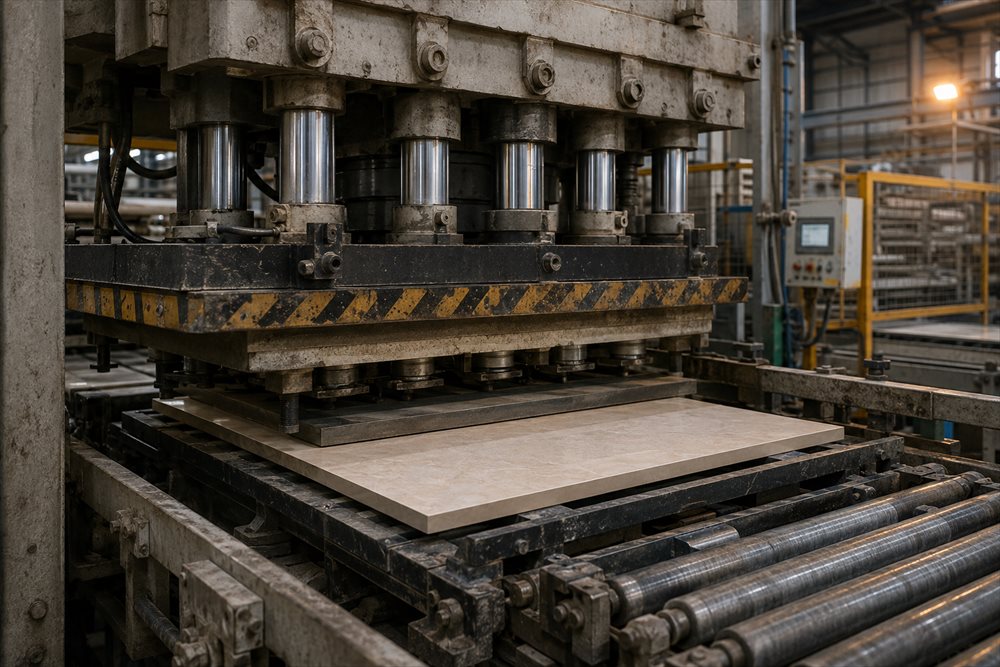
  4. Hydraulic press forming tiles04
    Pressing

    Powder is compacted under hydraulic pressure into the raw tile shape.

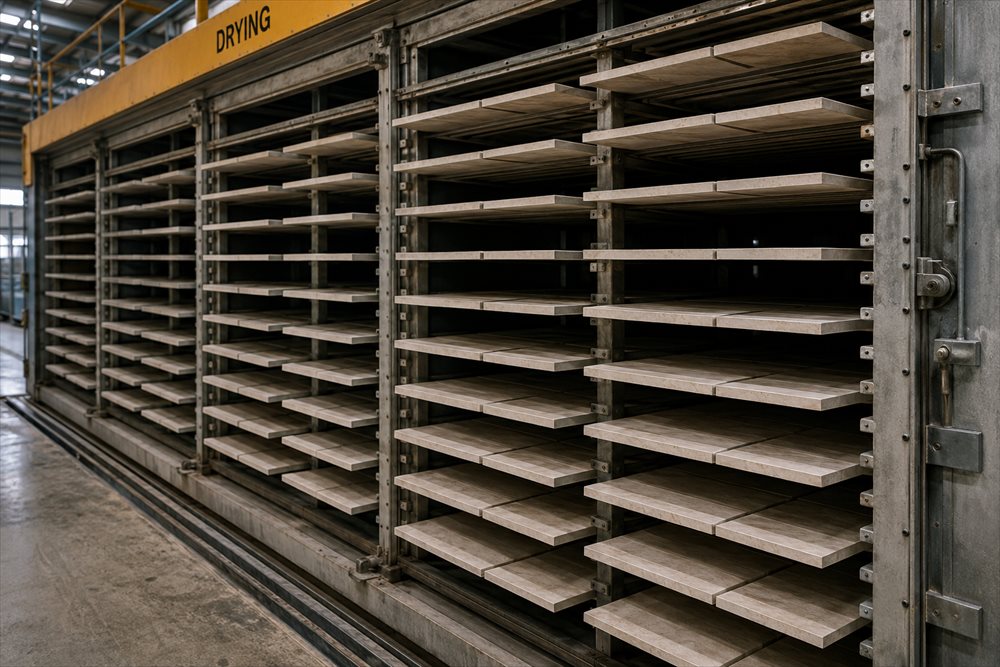
  5. Tiles drying05
    Drying

    Residual moisture is driven off so the body can accept glaze evenly.

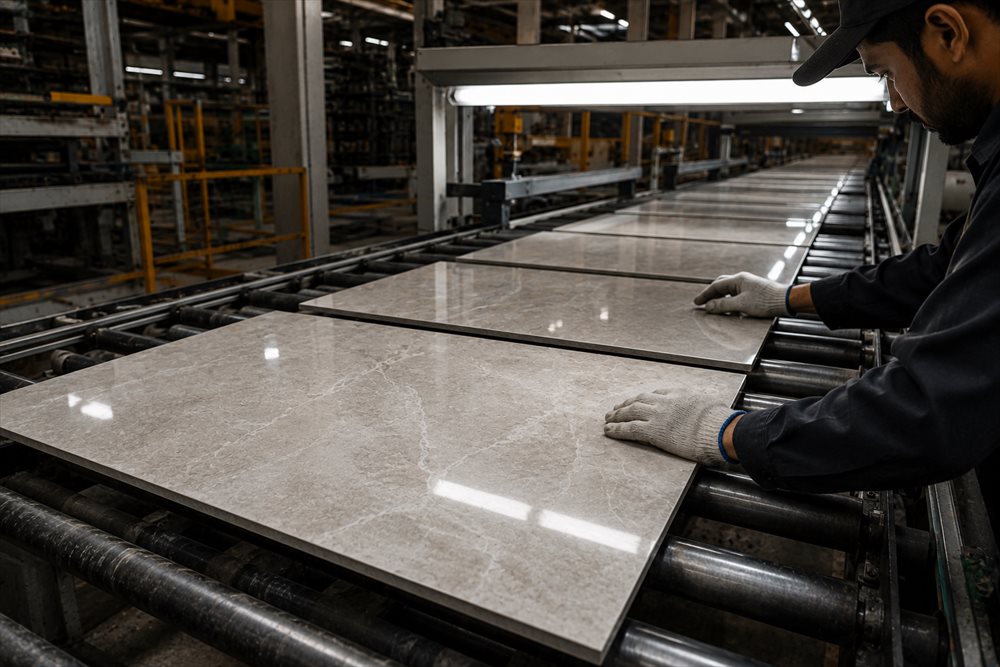
  6. Glaze being applied to tiles06
    Glazing

    Liquid glaze is applied — the layer that will vitrify into the finish.

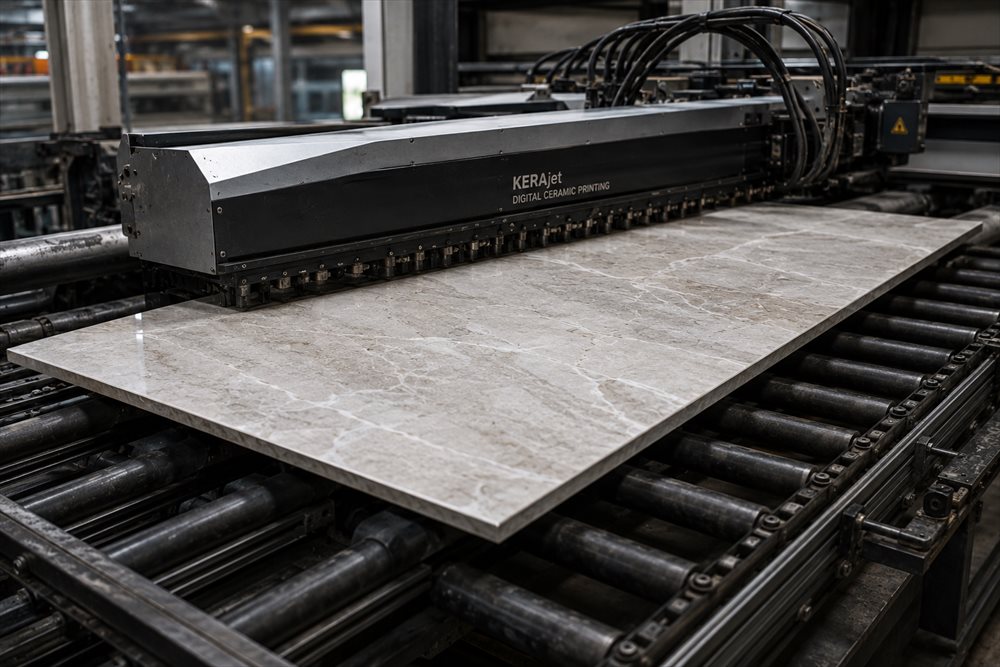
  7. Digital inkjet printing on tiles07
    Digital Printing

    High-definition inkjet lays the marble, stone or wood design in true colour.

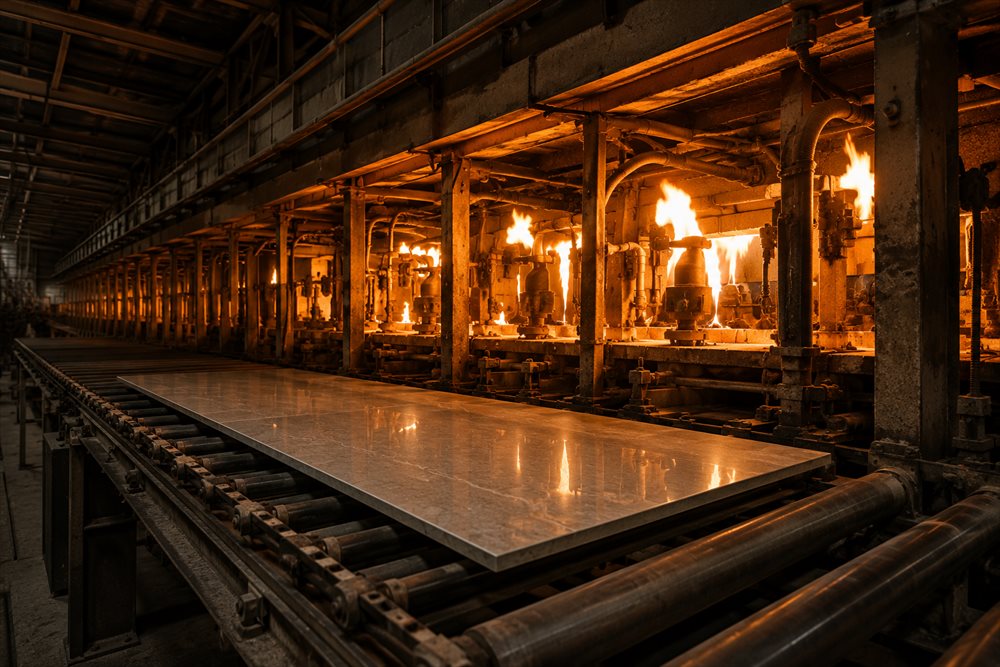
  8. Tile kiln with flames08
    Firing

    Tiles pass through a kiln near 1200 °C, fusing body and glaze into porcelain.

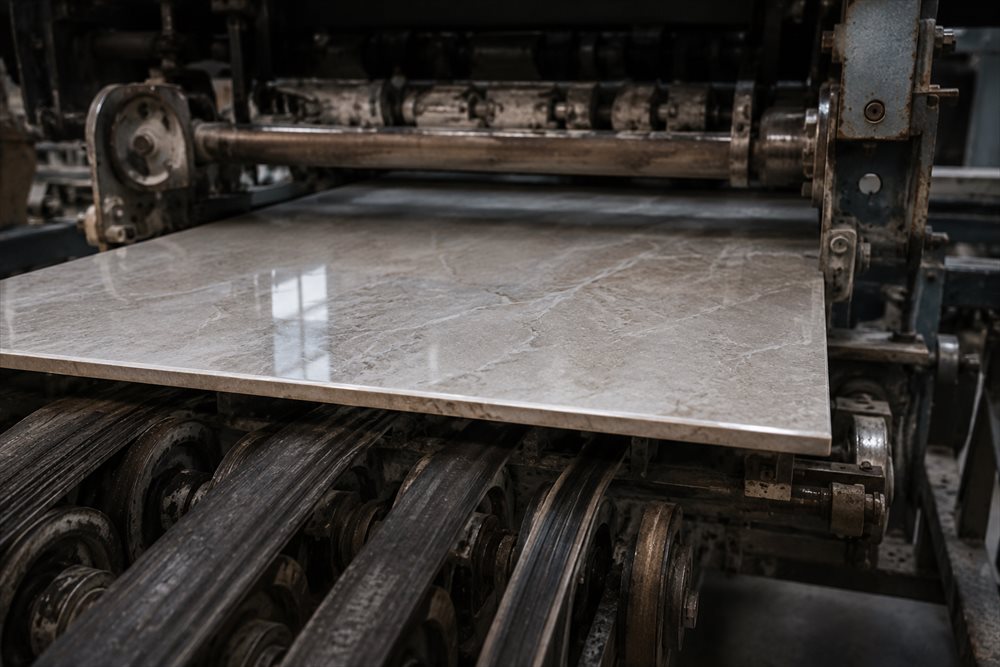
  9. Sorting and inspecting finished tiles09
    Sorting & Inspection

    Every tile is graded for calibre, tone and flatness before it ships.

03

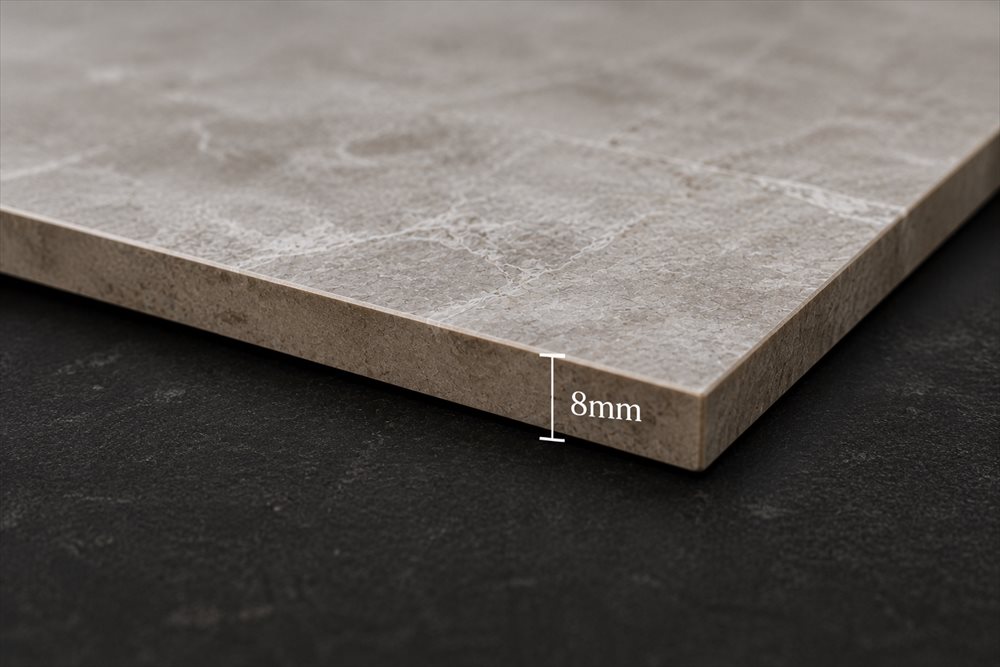
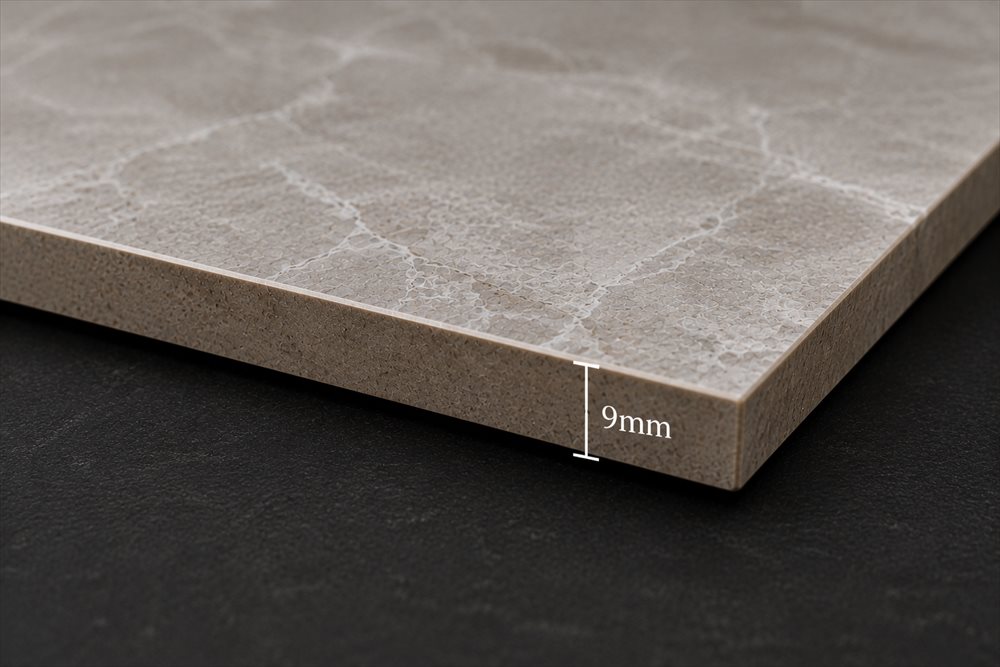
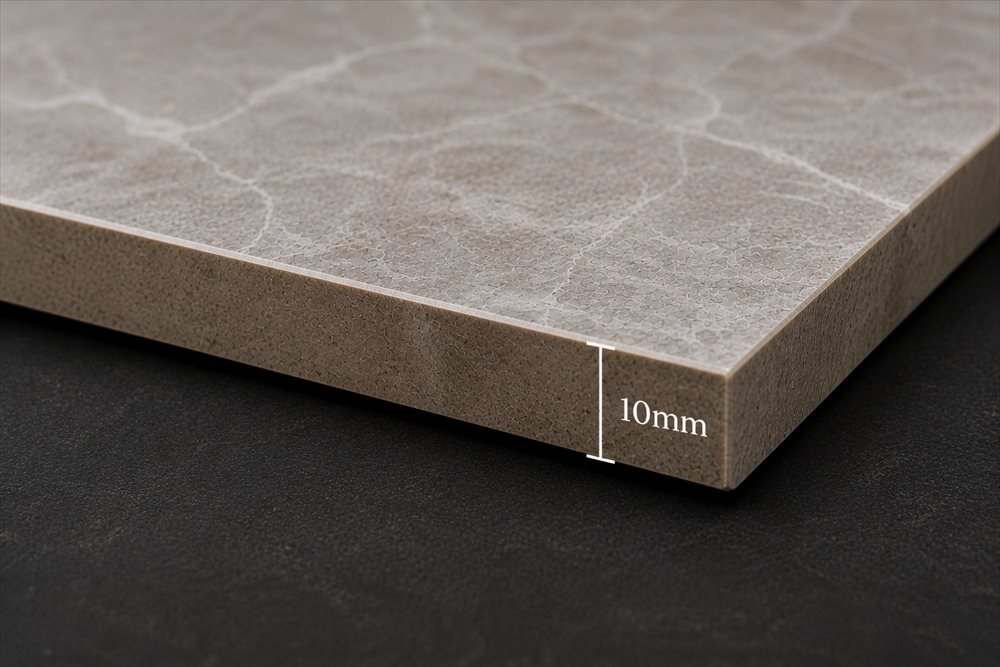
Body Thickness

The pressed body is manufactured to defined thicknesses — each suited to a different load, from feature walls to high-traffic commercial floors.

8 mm tile edge profile
8 mmWalls
9 mm tile edge profile
9 mmResidential floor
10 mm tile edge profile
10 mmHeavy floor
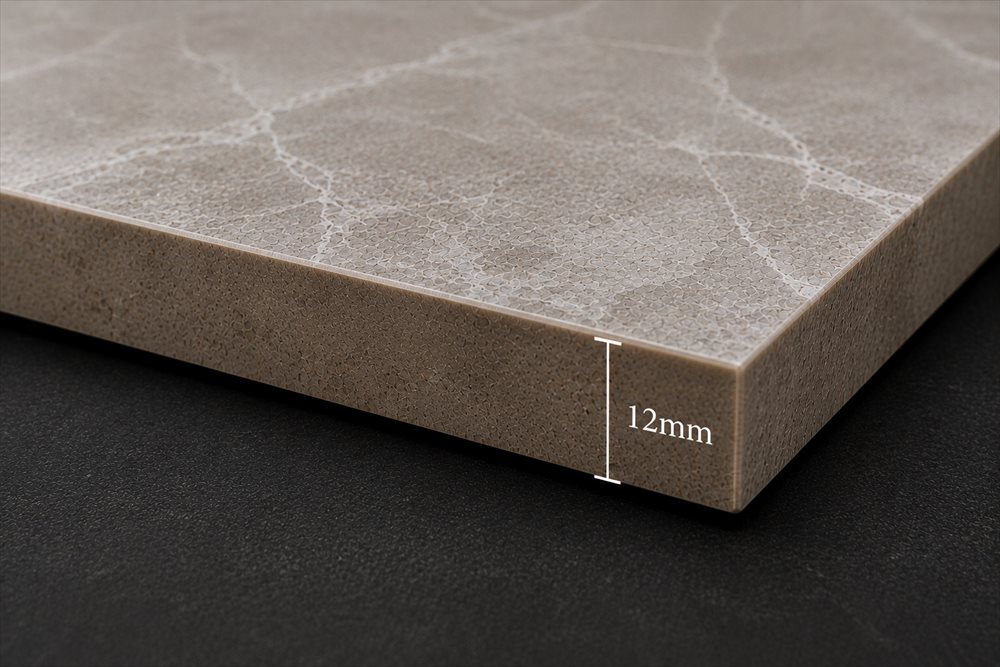
12 mm tile edge profile
12 mmCommercial
Next

See every face variation in the printed catalogue.

Open the Catalogue Library